Based in Milton. Working across Santa Rosa County.
We are a local outfit, not a franchise covering half the panhandle. That means shorter drives, faster response, and a crew that already knows how the ground behaves around here.
Why local matters
Why a local contractor is not just a nice idea
Ground behaves differently across Santa Rosa County, and it changes faster than you would expect. Deep sand on the coastal end at Navarre and Gulf Breeze. Heavier soil and clay pockets up north around Jay and Munson. River-influenced ground and a lot of flat lots around Milton and Bagdad. A crew that works the whole panhandle is guessing at all of it.
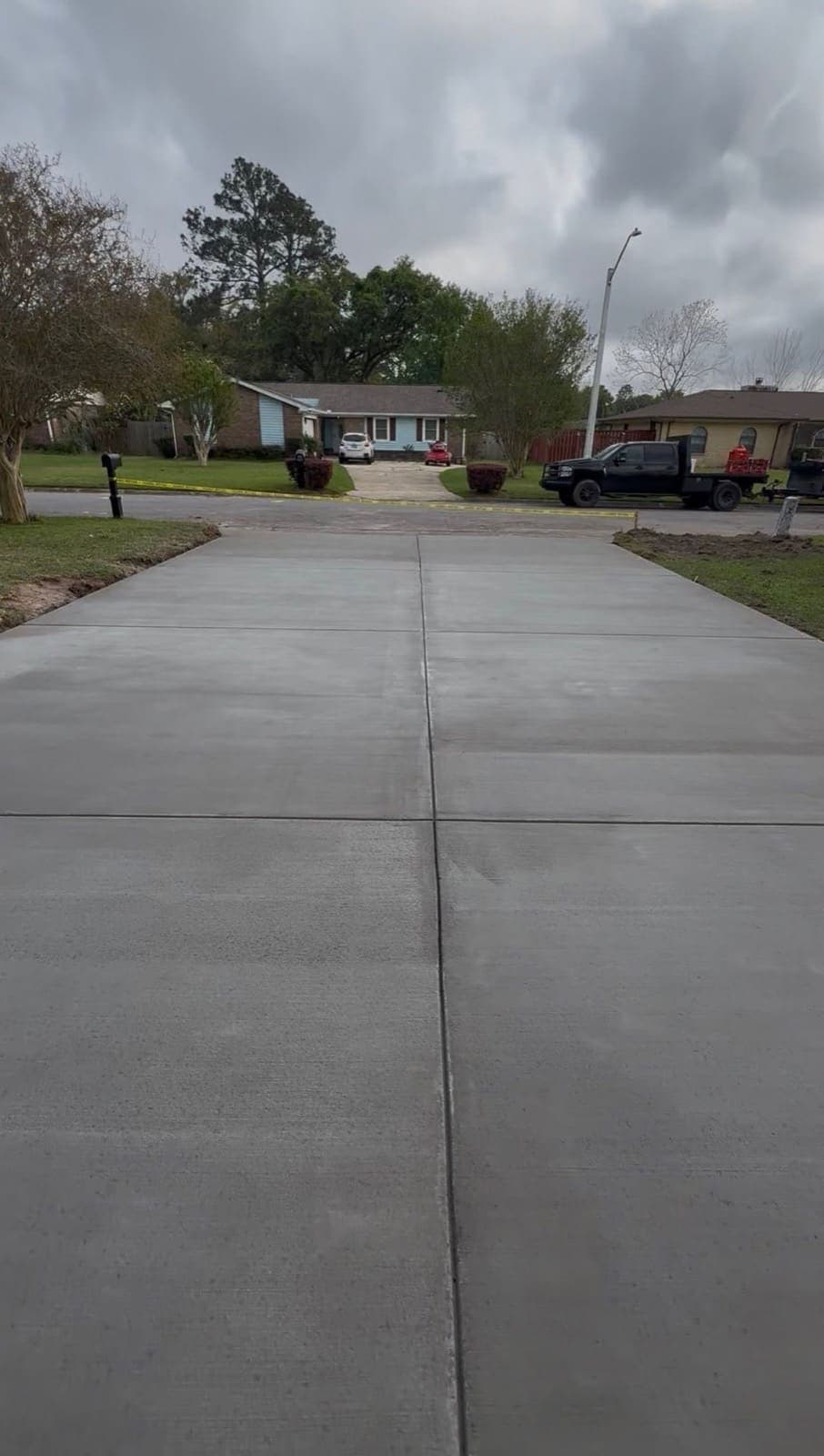
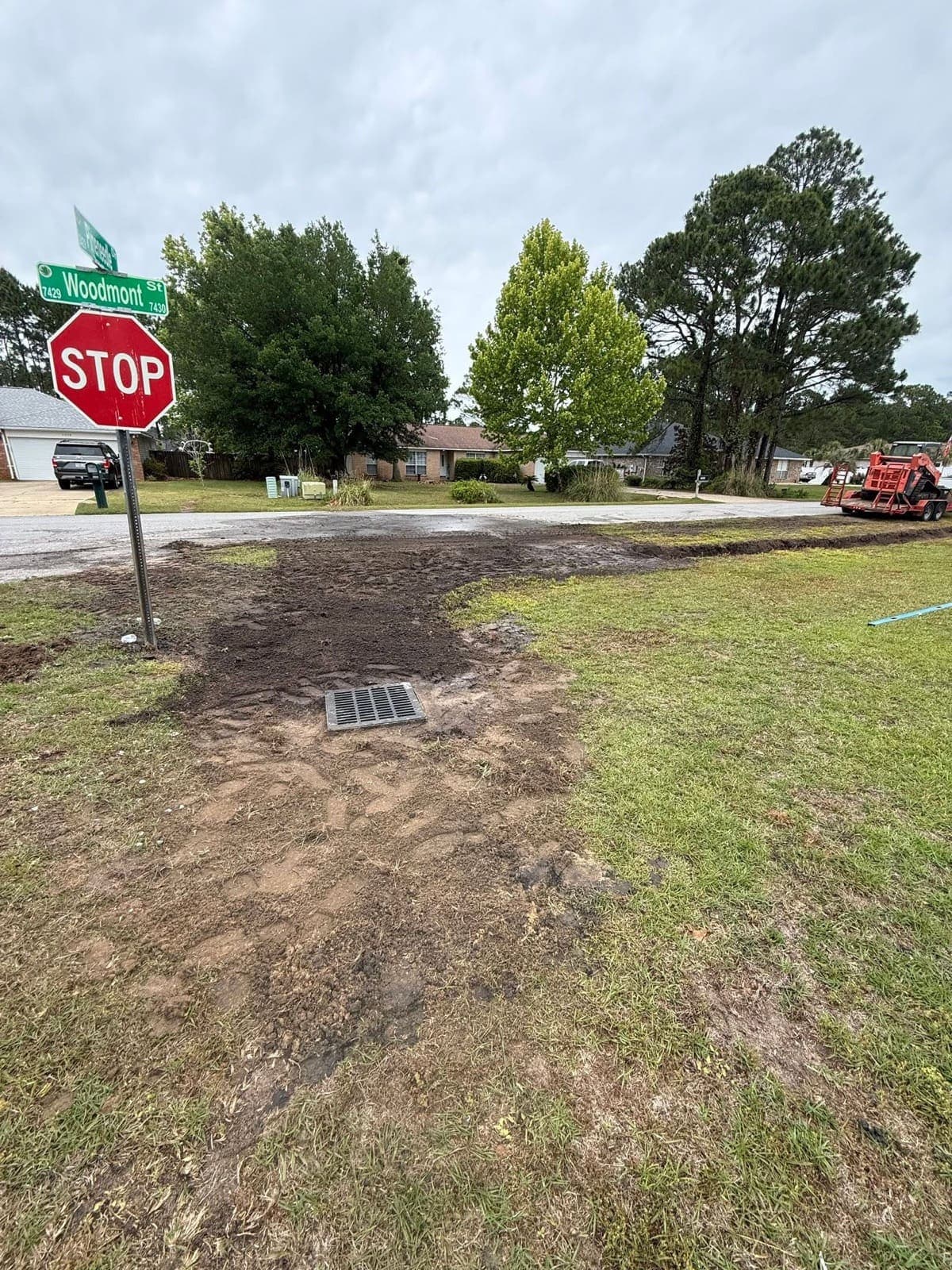
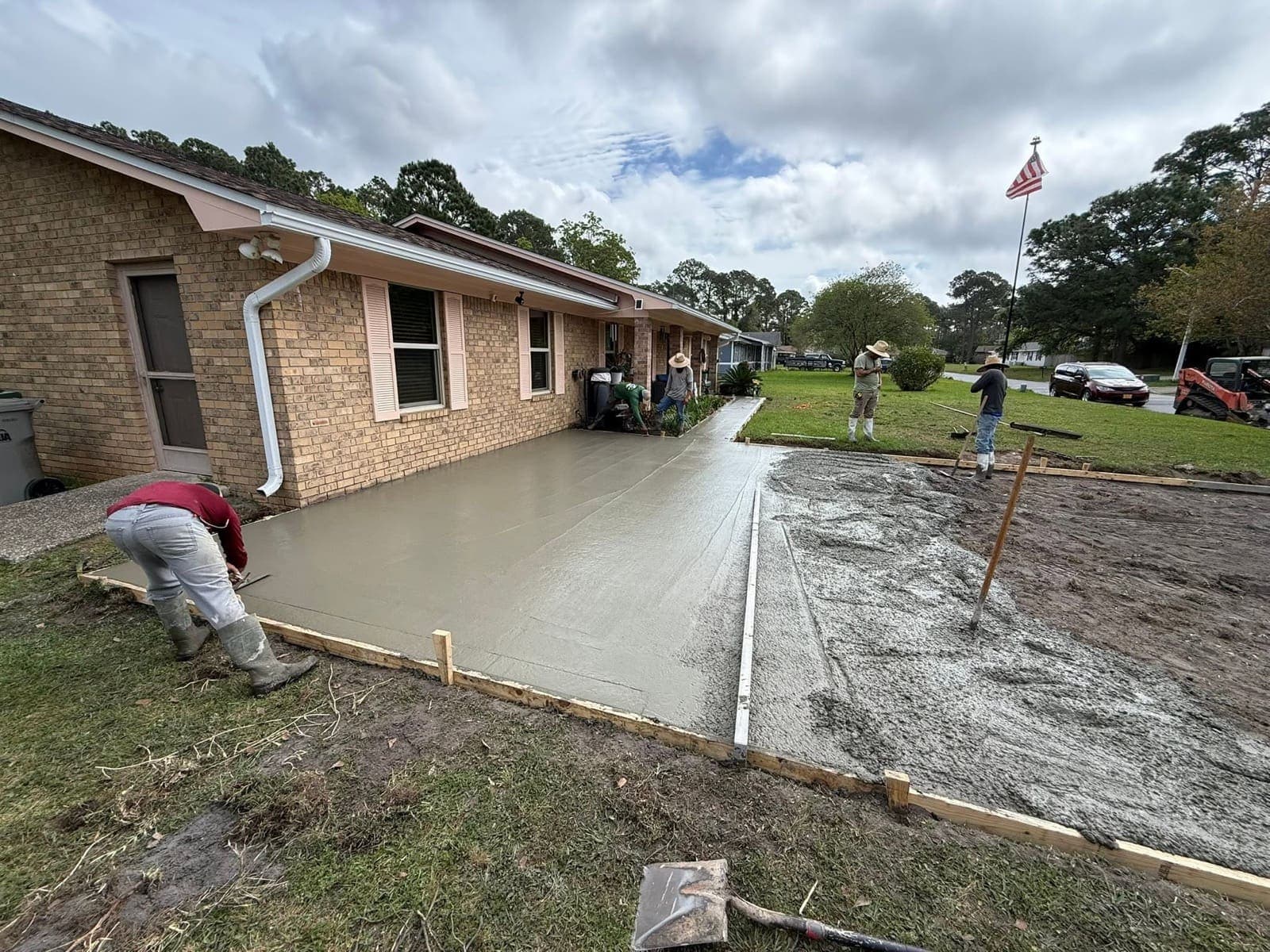
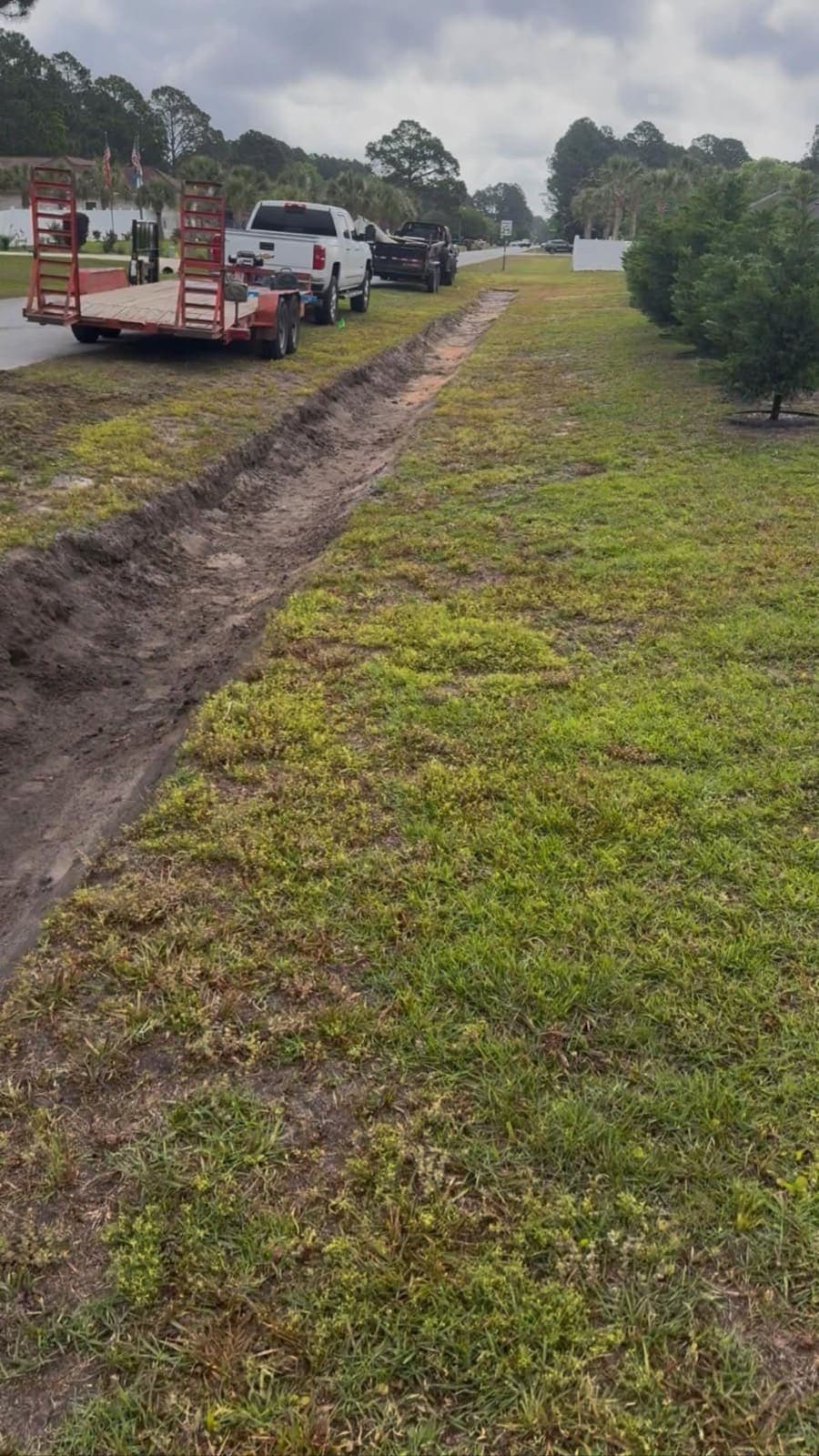
That matters most for the parts of the job nobody sees. How much base a slab needs, how deep a drain run has to go to keep fall, whether fill will compact or just move — those decisions are made from experience with the specific ground you are standing on. Getting them wrong does not show up on the day. It shows up in three years.
The other advantage is boring and practical: we are close. Short drives mean we can come look at a problem without it becoming a scheduling event, and it means that if something needs attention after the job, coming back is a thirty-minute inconvenience rather than a half-day commitment we will find reasons to postpone.
Communities
Where we work, and what the ground is like there.
Every one of these places presents a slightly different problem. Here is what we actually run into in each.
Milton, FL
Home base
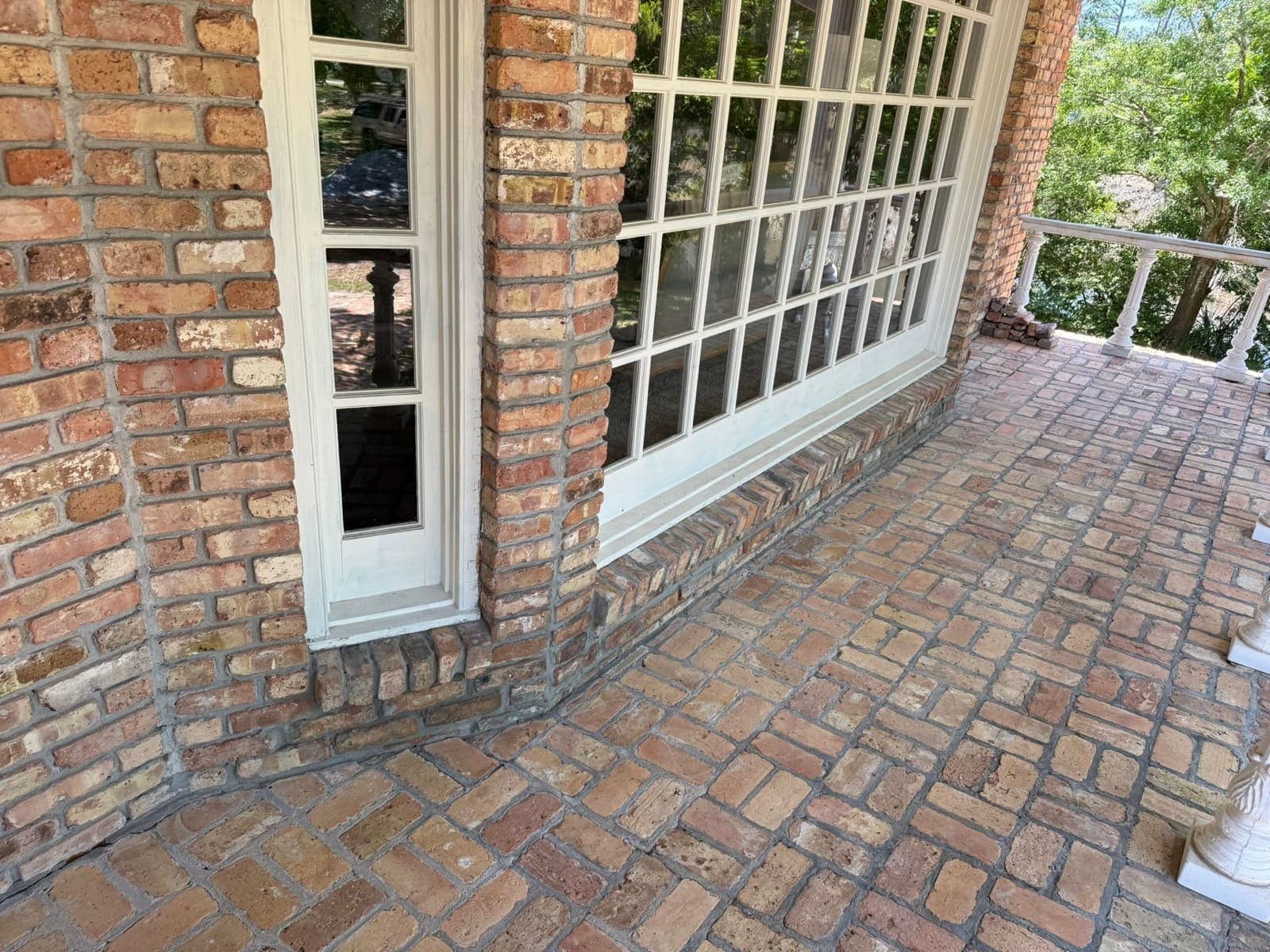
Our home base and the county seat, sitting on the Blackwater River. Milton mixes an older historic core with newer subdivisions on the outskirts, which means we see both ends of the work — settled brick and failing mortar on older homes near downtown, and drainage and driveway problems on newer builds where the lots were graded fast.
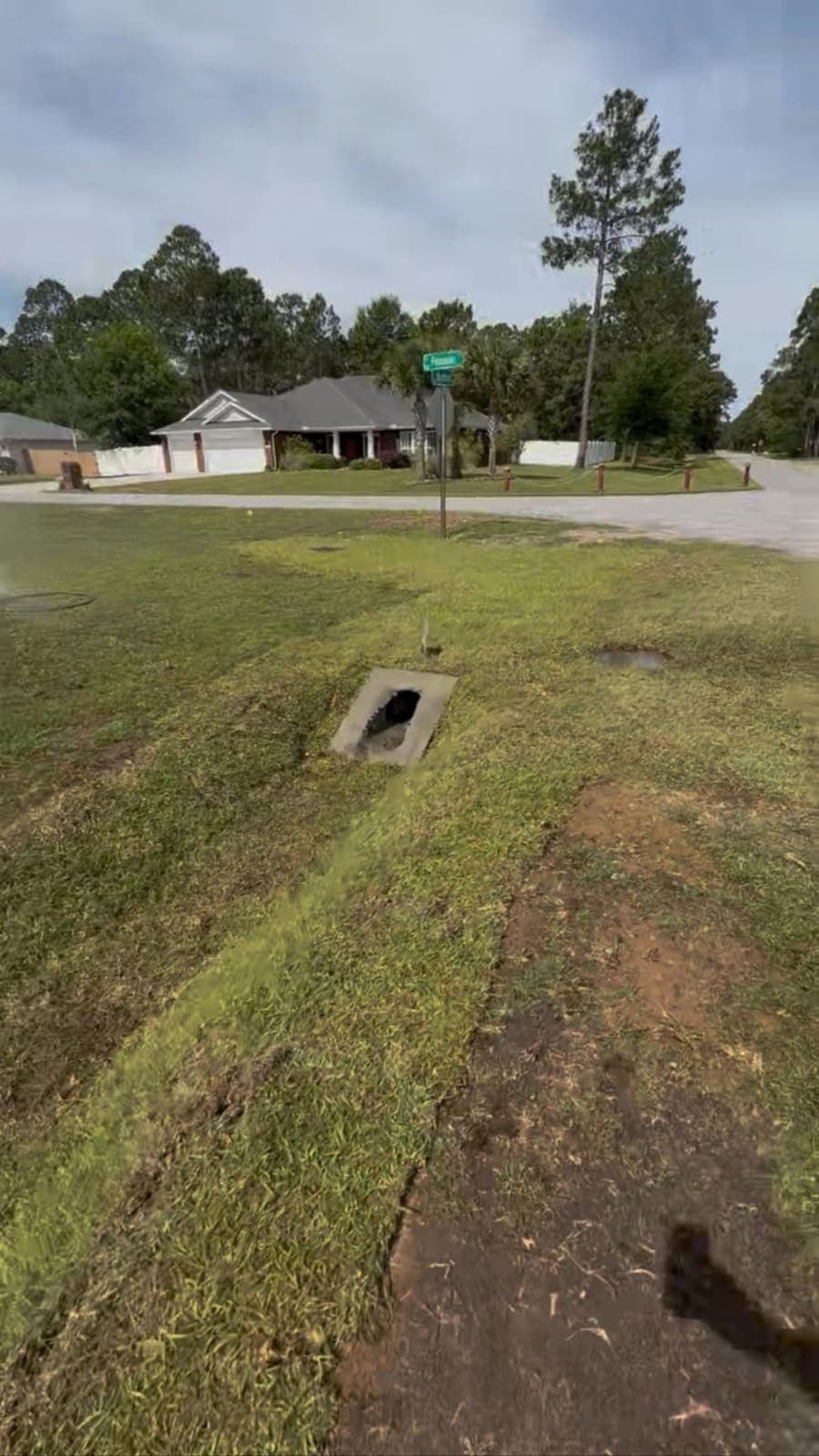
What we see there: River proximity and a lot of flat ground make standing water a recurring theme here, particularly after summer storms.
Immediately west of Milton and one of the fastest-growing parts of the county. Pace is dominated by newer residential subdivisions, which brings a specific set of problems: lots graded to the minimum during construction, driveways poured on fill that was never properly compacted, and yards where runoff from several neighbouring properties ends up in one back corner.
What we see there: Newer construction, so less masonry repair and considerably more drainage, regrading, and slab work.
A historic mill village just south of Milton with a designated historic district and a lot of genuinely old housing stock. Work here needs a lighter touch — older masonry built with soft brick and lime-rich mortar cannot be repointed with modern high-strength mix without damaging the brick faces over time.
What we see there: Matching historic brick and mortar matters more here than anywhere else we work.
On the peninsula between Pensacola Bay and Santa Rosa Sound. Coastal exposure changes the job: salt air is hard on everything, the soil is sandier than inland, and the water table is closer to the surface, which affects both drainage design and what a slab is sitting on.
What we see there: Sandy coastal soil and a high water table make base preparation and drainage discharge planning the critical parts of any job.
Between the Sound and the Gulf on the southern edge of the county. Like Gulf Breeze, it is a coastal environment with very sandy ground, but with a lot of newer residential development mixed in. Sand drains beautifully and holds nothing up, which is a useful summary of most of the work we do there.
What we see there: Deep sand means compaction and base work carry more weight than almost anything else.
Just across the county line to the west. Pensacola has some of the oldest housing stock in the region, including whole neighbourhoods of historic masonry, alongside newer development further out. It is the one area we serve outside Santa Rosa County, and we take work there when the scope and schedule make the drive sensible.
What we see there: Older brick and mortar repair is a larger share of the work here than anywhere else on this list.
North Santa Rosa County, up in the agricultural part of the county. Properties tend to be larger, with more acreage, longer driveways, and more land work — clearing, access routes, pads, and grading — than the tight-lot drainage problems we see closer to the coast.
What we see there: Bigger lots, heavier soil in places, and more site work and access-route jobs than suburban drainage.
Rural north county, out near the Blackwater River State Forest. This is genuinely country work — long driveways, well-separated properties, and site preparation on land that has often been left to grow over. Access is usually the first thing to solve rather than the last.
What we see there: Clearing, access, and drainage on acreage, where the nearest place to put water can be a long way from the problem.
The communities above are where we work regularly, not a fence. We travel further for the right project — it comes down to scope, schedule, and whether the drive makes sense for the size of the job.
The fastest way to find out is to send your address or ZIP with the estimate form. If we cannot get to you, we will say so straight away rather than leaving you waiting, and where we can we will point you toward someone local who does good work.