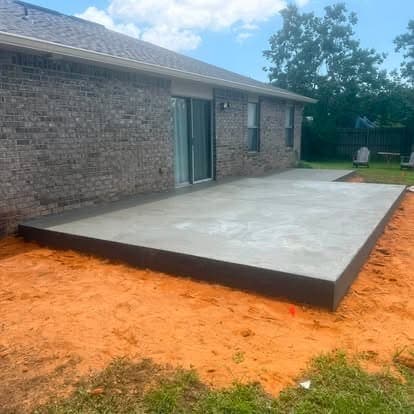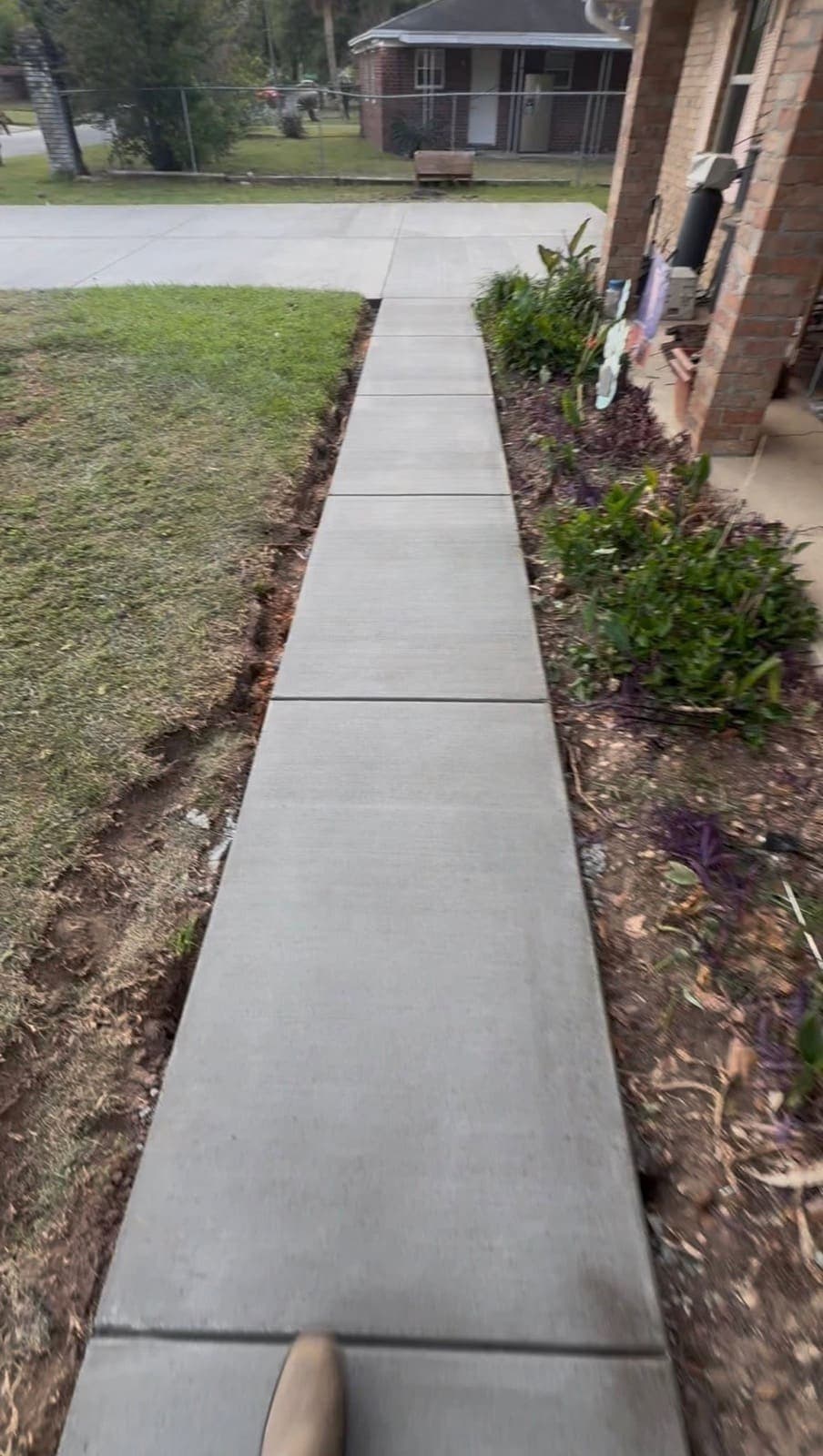
Lot clearing
Light clearing and brush removal, taking out overgrowth and dealing with the root mass rather than just cutting the tops off.
Clearing, grading, access, haul-off
Skid-steer clearing, grading, and site preparation that gives whatever comes next a level, stable base.
The short version
We clear, cut, fill, and compact so the next stage of the work is not fighting the site.
Local conditions
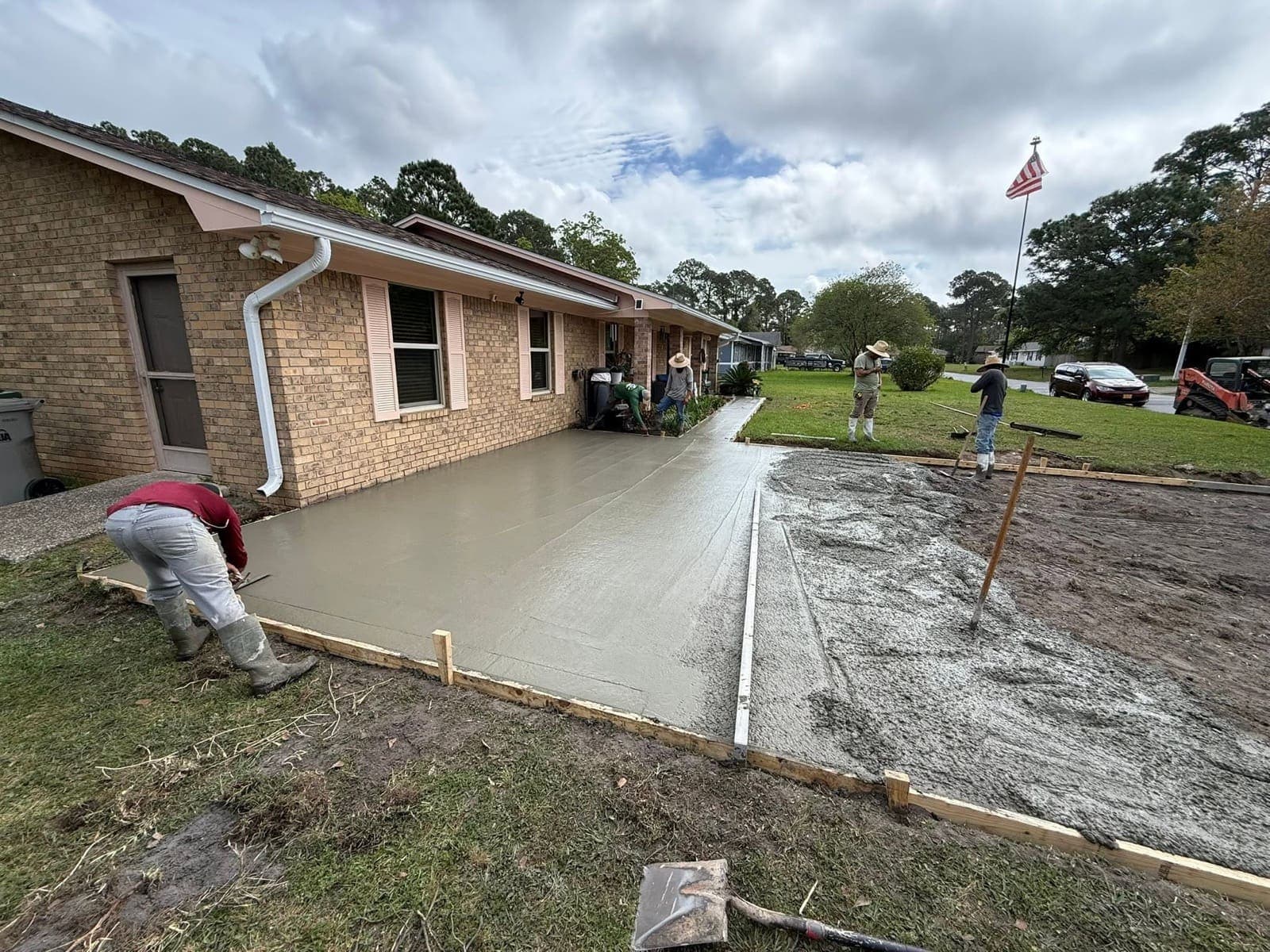
Ground around Milton and Santa Rosa County ranges from clean sand to heavy clay pockets, often on the same lot. That matters because they behave completely differently under load and under water. Sand compacts well and drains fast but washes out readily. Clay holds water, softens badly when saturated, and moves as it wets and dries.
Add the vegetation. Left alone for a season or two, land here does not stay open — it fills with palmetto, brush, vines, and volunteer pine. Clearing is rarely just cutting; it is dealing with root mass and then stabilising what is left so the first heavy rain does not move it.
Most site work problems we get called about are really water problems in disguise. A driveway that ruts out, a pad that will not stay level, a low corner nobody can use — the fix is usually a combination of cutting, filling, compacting, and giving the water a route off the site. Doing the earthwork without thinking about where water goes is how you end up doing it twice.
Recognise any of these? Send a photo — we can usually tell you from the picture whether it needs looking at soon.
Scope
What a grading contractor does is whatever has to happen before anything else can. On a suburban lot that is usually correction; on acreage it is usually opening the ground up in the first place.
Light clearing and brush removal, taking out overgrowth and dealing with the root mass rather than just cutting the tops off.
Cut and fill to bring a site to the grade the finished use needs, with fall built in so the surface sheds water.
Skid steer and compact track loader work where access is tight or the job does not warrant bigger equipment.
Fill placed and compacted in lifts, because fill that is dumped and shaped looks finished and settles for years.
Bringing material in where the site cannot supply it, and taking spoil, stumps and debris off the property.
Driveway installation and equipment routes cut in with a stable base and enough crown to shed water, so it does not rut out with the first heavy rain.
Level, compacted pads for slabs, shops, sheds and outbuildings, prepared for whatever is going on top.
How we work
No mystery, no surprises. This is the order it happens in and what each stage is actually for.
We look at what is coming out, what is staying, where the equipment can get in, and what the finished ground needs to do. Marked utilities get located before anything digs.
Vegetation, brush, and undergrowth come out. Trees you want kept get identified and protected — including their root zones, which are wider than most people assume and easy to destroy with a track machine.
High ground gets cut, low ground gets filled, and the site is shaped toward the grade the finished use requires. This is where the fall to shed water gets built in, not as an afterthought.
Fill that is not compacted in layers will settle, and anything built on it settles with it. This is the invisible step that decides whether a pad stays flat.
Debris, stumps, and spoil leave the property. We would rather hand back a site that is ready for the next stage than one with a pile in the corner that becomes your problem.
Pricing
Site work is priced on machine time, material, and disposal. The three things that move it most are how much has to come out, how much has to come in, and how hard it is to get equipment to the work.
Light brush is quick. Heavy palmetto root mass, mature undergrowth, or a lot that has been left for years is considerably more machine time.
Moving soil around the site is cheaper than importing fill or hauling spoil away. A balanced site — where what is cut can be used as fill — is the cheapest case.
Stumps, root balls, old concrete, and construction debris all carry haul and tipping costs that vary by material.
If the machine can drive on, it is straightforward. Narrow gates, soft ground, or a site that needs an access route cut in first all add time.
If the site needs swales, a defined fall, or a route for runoff, that is part of the earthwork rather than a separate trip.
Light clearing and grading on a residential lot is often a one or two day job. Heavier clearing, significant cut and fill, or work that needs imported material runs longer.
Ground conditions drive the schedule more than anything. Saturated ground after a heavy rain will not compact properly and a tracked machine will do more damage than good, so we would rather wait a couple of days than hand back a churned site.
Free estimate, no obligation, and an honest answer about whether it is worth doing.
What to watch for
Worth knowing before you hire anyone — including us. If a quote you are looking at skips these, ask why.
Dumping fill and shaping the top of it looks finished and settles for years. Fill has to go in and be compacted in lifts, or everything built on it inherits the settlement.
A beautifully level pad with no fall becomes a shallow pond. Finished grade needs to shed water somewhere deliberate.
Running heavy equipment over soaked soil destroys its structure and makes proper compaction impossible. It also leaves ruts that take real work to correct.
Tree roots extend well past the canopy. Cutting or compacting over that root zone can kill a mature tree slowly enough that nobody connects it to the site work a year earlier.
Proof
Questions
Something not covered here? Ask us directly — we would rather answer it than have you guess.
Ask about your projectThere is no honest per-acre number. Light brush and heavy palmetto root mass on the same acre are completely different jobs, and disposal costs vary by material — stumps and root balls are handled differently from brush or old concrete. We price it after walking the parcel.
Yes — clearing, grubbing, cut and fill, base preparation and pad work. Tell us what is going on the site and what the builder needs the finished grade to be, and we work back from that.
Yes. An access route needs a stable base and enough crown or fall to shed water, otherwise it ruts out with the first heavy rain and becomes impassable exactly when you need it.
Yes, it is part of the job rather than an add-on. Debris, stumps and spoil leave the property — we would rather hand back a site that is ready for the next stage than one with a pile in the corner that becomes your problem.
Yes — clearing, grubbing, rough grading, and pad preparation. Tell us what is going on the site and what the builder needs the finished grade to be, and we will work back from that.
Yes. Access routes need a stable base and a crown or fall to shed water, otherwise they rut out with the first heavy rain and become impassable exactly when you need them.
It is hauled off the property as part of the job. Disposal costs vary by material — stumps and root balls are handled differently from brush or old concrete — and that is reflected in the estimate.
Yes, and it is not optional. Underground utilities get located before any excavation begins. This is a safety and liability matter, and it is on us to make sure it happens.
That is the ideal case. When the same crew does the earthwork and the pour, the base is prepared for the slab that is actually going on it, and nobody is arguing about whose responsibility a settlement problem is.
Often paired with
These jobs disturb the same ground. Doing them together usually costs less than doing them one at a time.
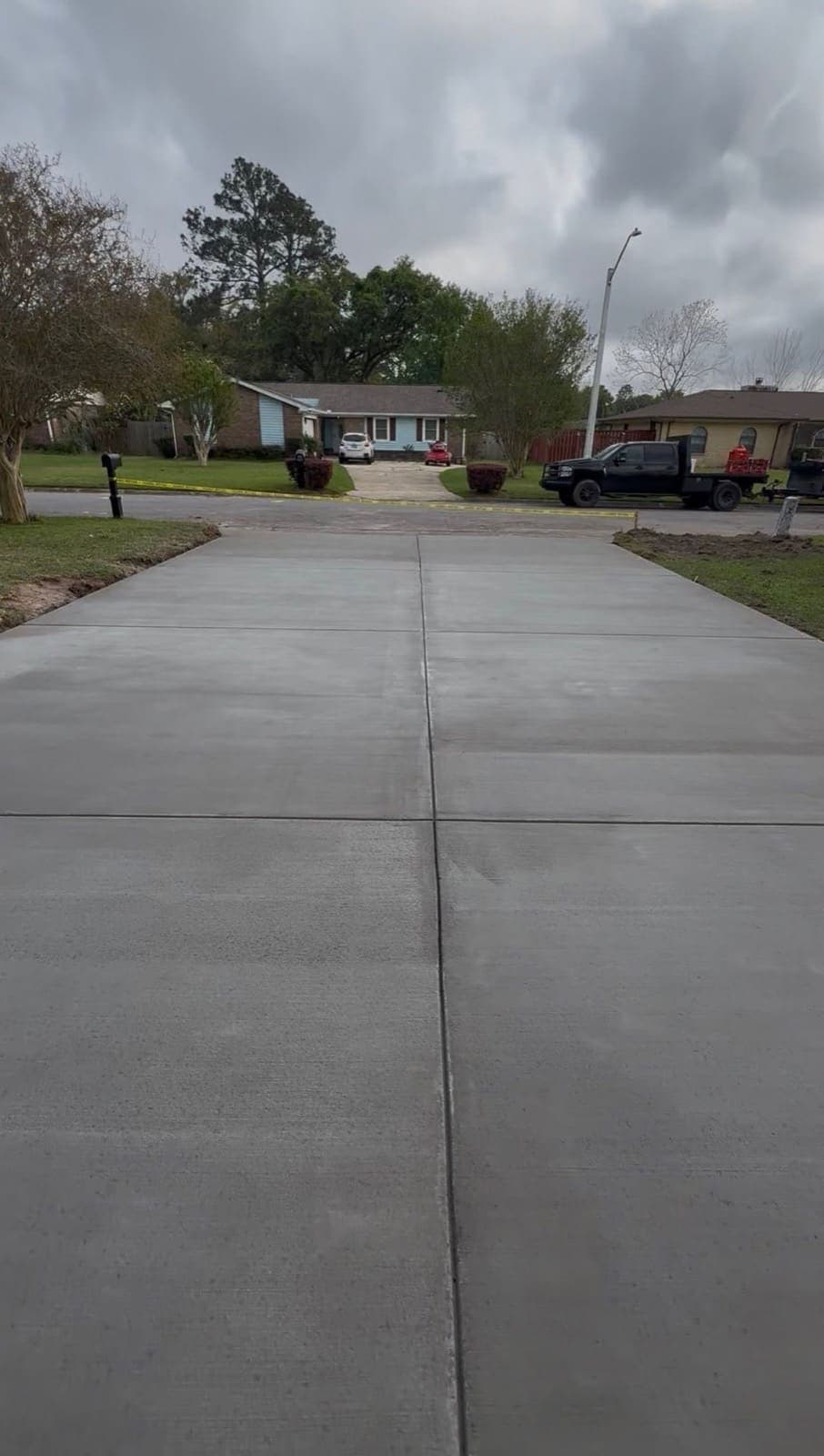
Tear-out and replacement or fresh pours — driveways, patios, walkways, and equipment pads, formed and finished to drain properly.
Learn more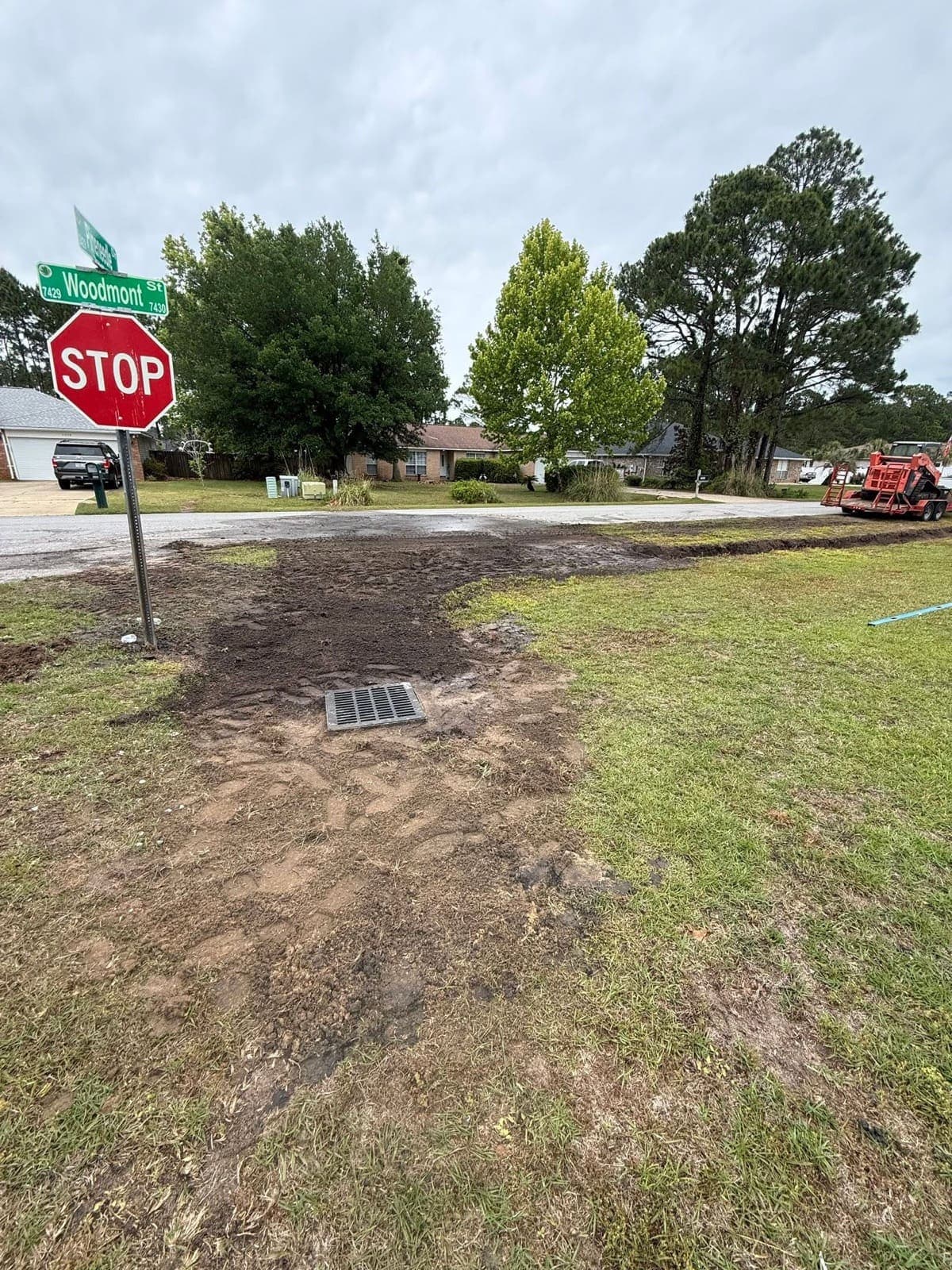
Catch basins, buried drain lines, and regrading that move water away from your foundation instead of into it.
Learn more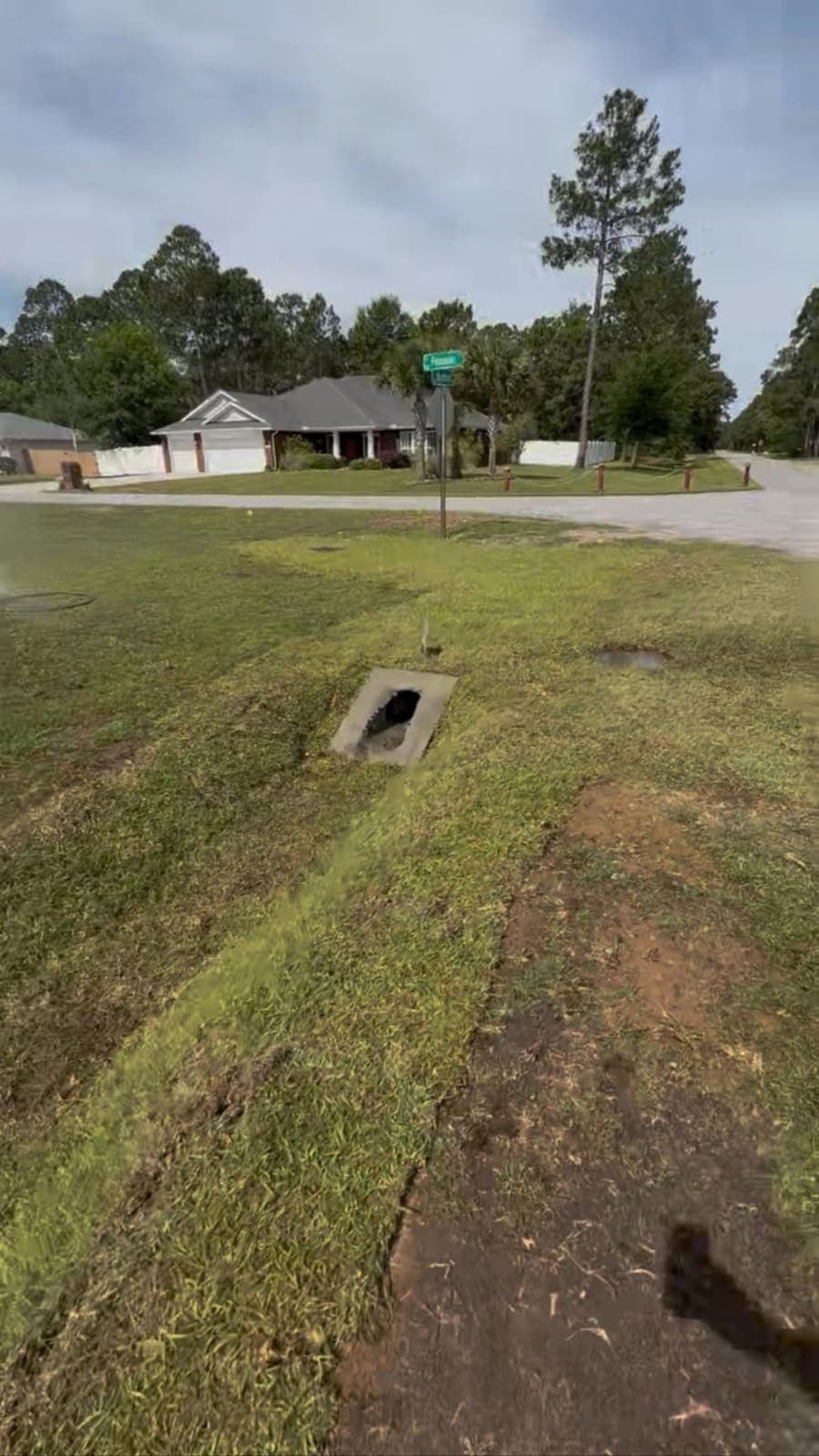
Graded, prepped, and laid sod that takes root — including restoring the ground after drainage or concrete work.
Learn moreFree estimate
Send a couple of photos and a sentence. We will tell you honestly whether it is something we should come look at — and what it is likely to take.