Brick repair
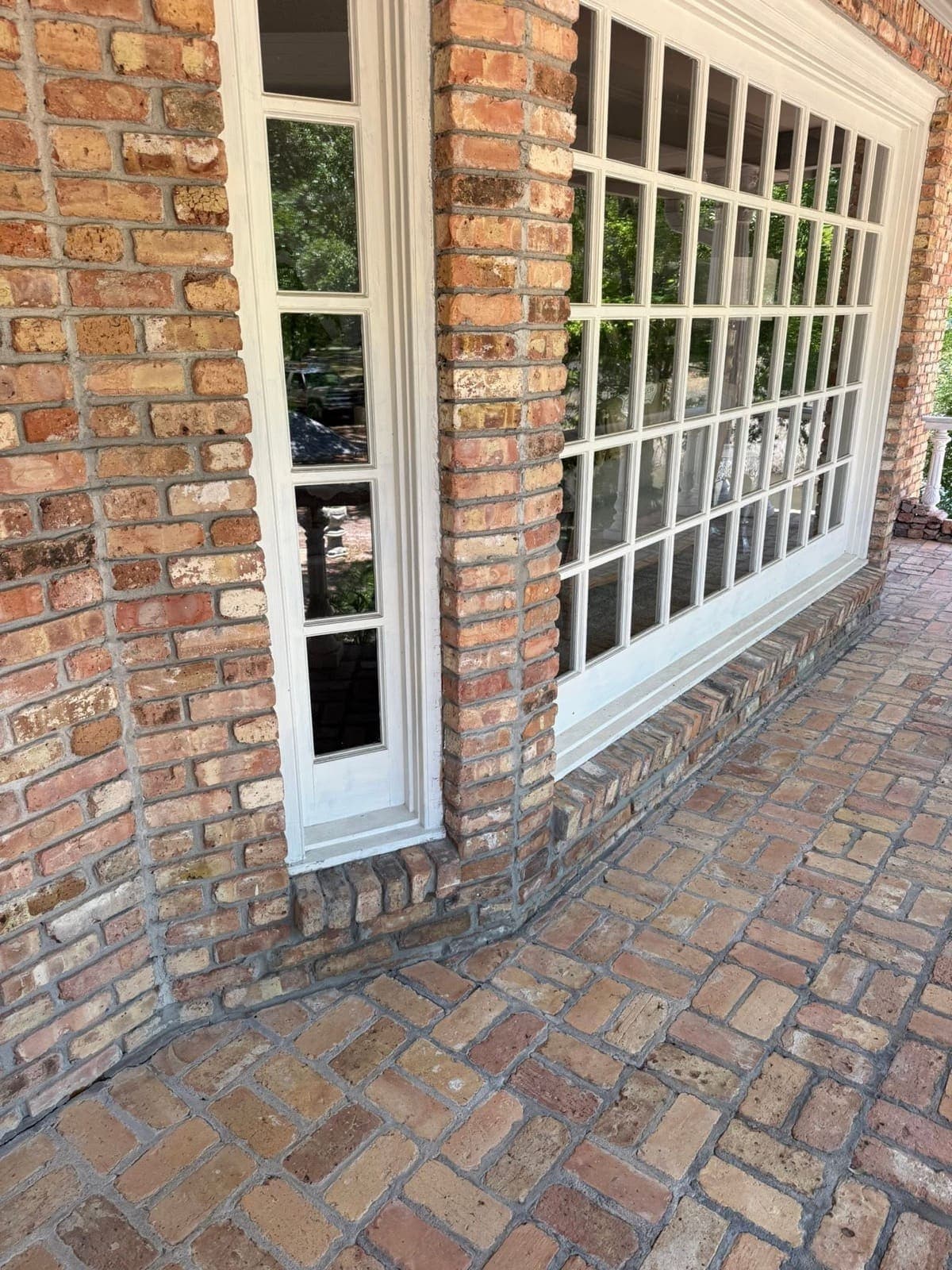
Cracked, displaced and spalled brick removed and rebuilt with matched brick, on walls that have moved and settled. This is the bulk of what a brick mason does around Milton.
Brick repair, tuckpointing, block work
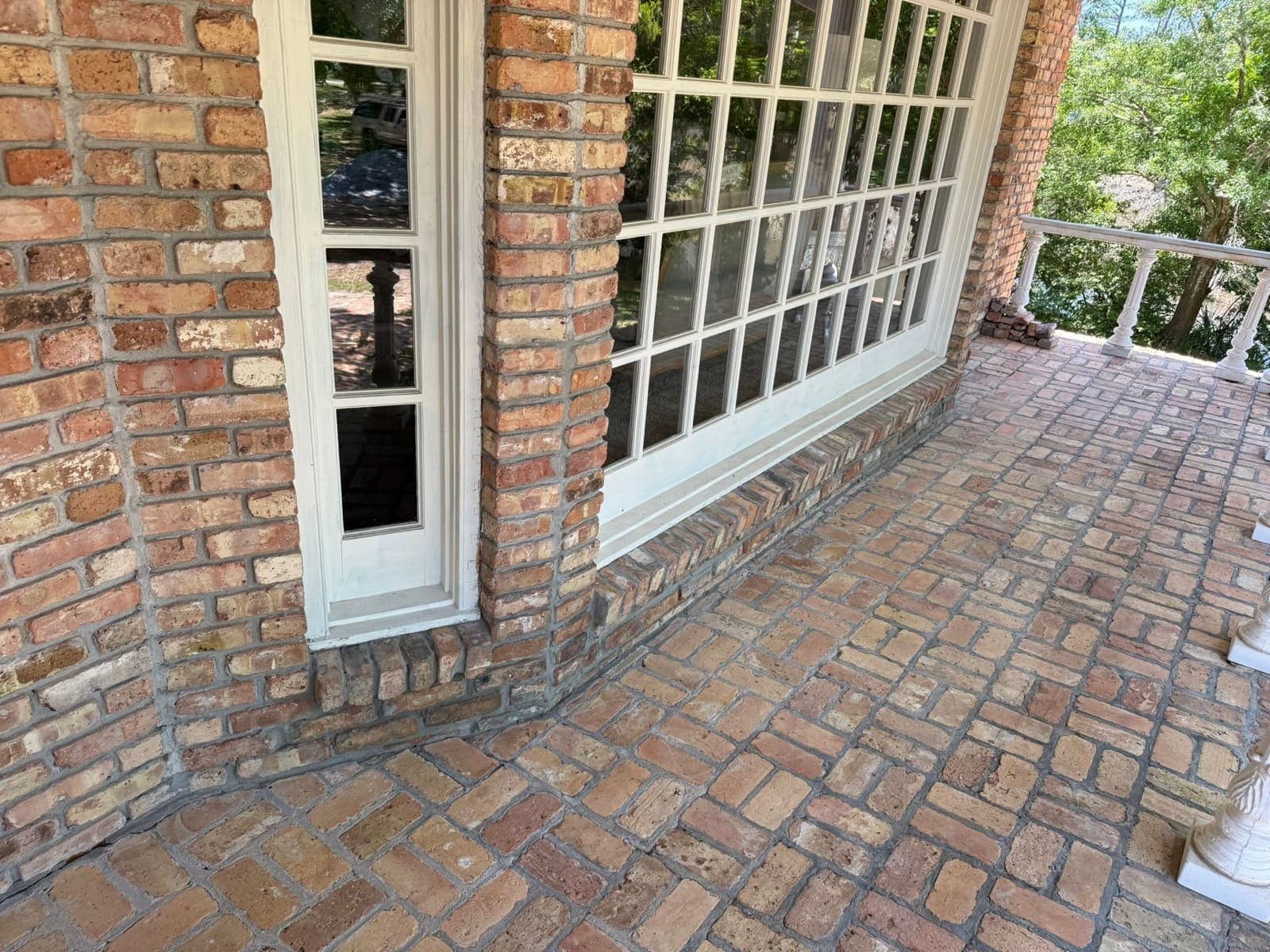
Settled brick, cracked mortar joints, and failing window sills rebuilt to match the existing masonry.
The short version
We shore the opening, remove the failed courses, and rebuild with matched brick and mortar so the repair disappears into the wall.
Local conditions
Brick veneer is not holding your house up. It is a skin, hanging on the structure behind it, and it depends on everything under and behind it staying put. When the ground under a corner of the house moves — and on sandy soil with heavy seasonal rain, it moves — the veneer cannot flex. It cracks.
The cracks follow the weak line, which is the mortar joint. You will see stair-stepping through the joints near a corner, a vertical separation where brick meets a window frame, or a course under a sill that has dropped and opened a gap. That gap is the part that matters. A crack in a wall is ugly; an open gap under a sill is a direct route for water into the wall cavity, and behind that is sheathing, framing, and insulation that all cost considerably more than brickwork.
Older homes around Milton and Santa Rosa County are often built with reclaimed or soft-fired brick and lime-rich mortar, which is a different material from a modern hard brick. It matters, because repointing soft historic brick with a modern high-strength mortar traps moisture in the brick and spalls the faces off over time. Matching the existing masonry is not a cosmetic preference. It is what keeps the repair from destroying the wall around it.
Recognise any of these? Send a photo — we can usually tell you from the picture whether it needs looking at soon.
Scope
Repair is the majority of what a masonry contractor does around here, but not all of it. If your job is outside this list, ask — some masonry work belongs with a specialist conservator and we will say so.
Cracked, displaced and spalled brick removed and rebuilt with matched brick, on walls that have moved and settled. This is the bulk of what a brick mason does around Milton.
Where the courses under a window or over an opening have dropped and opened a gap into the wall, we support the opening and rebuild it.
Eroded mortar joints raked back to sound material and refilled with mortar matched for colour, texture and — more importantly — strength.
Stair-step cracking, separation at corners, and columns pulling away from window frames, addressed after working out what actually moved.
Block laid for walls, piers and foundations, including on outbuildings and shops.
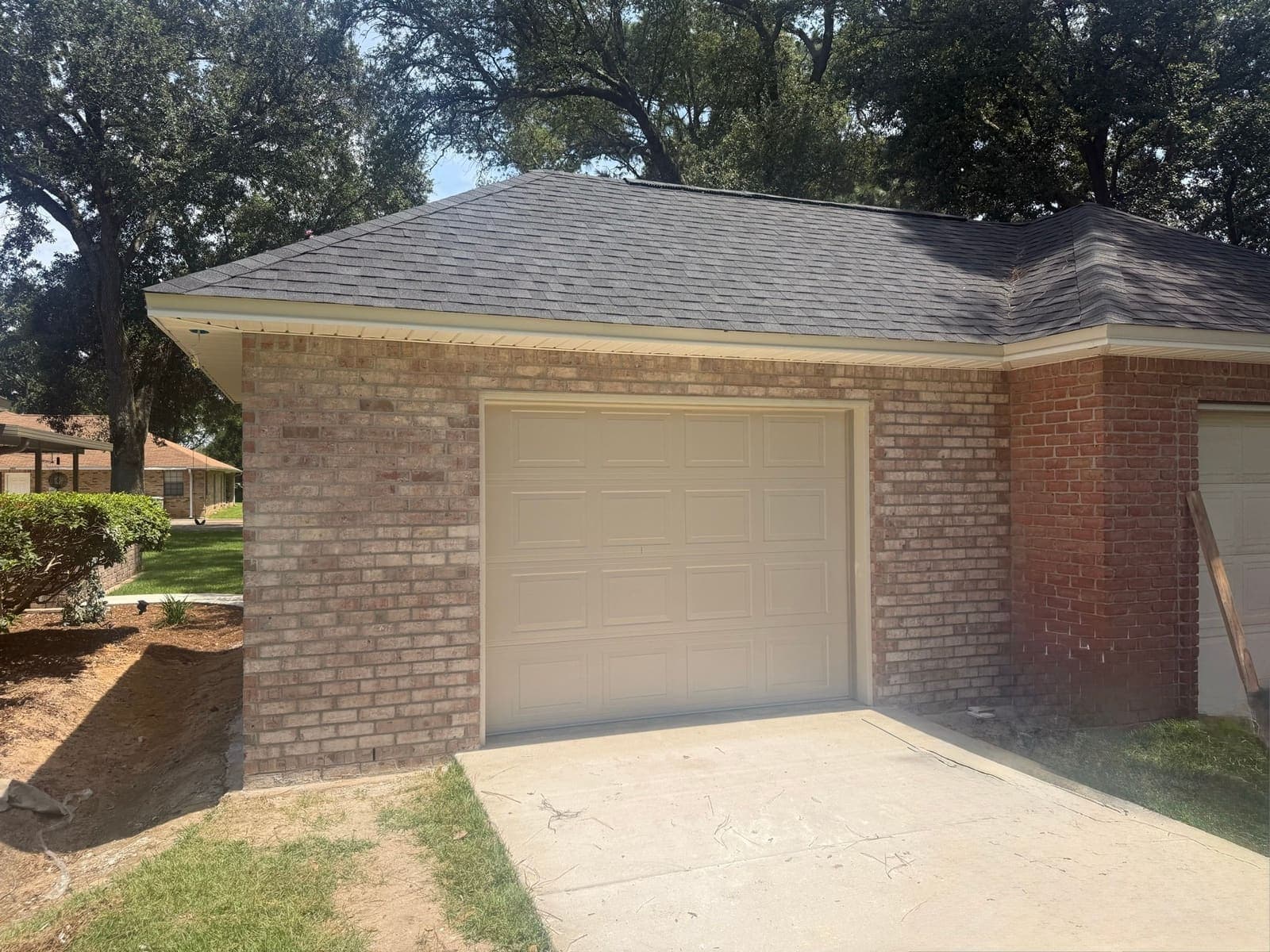
New brick structures built onto an existing house and matched to the original brick, mortar colour and joint profile.
How we work
No mystery, no surprises. This is the order it happens in and what each stage is actually for.
Before touching a brick we work out why the wall opened up. Settlement, a washed-out footing, a failed lintel over an opening, and simple mortar erosion all look similar from ten feet away and need completely different repairs. Rebuilding a wall without answering this just resets the clock.
Where a sill or a course above an opening has to come out, the opening gets temporarily supported first. Windows and doors are heavy, and removing the masonry under or beside them without support is how a repair turns into a much larger repair.
Cracked, displaced, and spalled brick comes out along with the failed mortar, cut back to sound material. Salvageable brick is cleaned and set aside — on an older wall, reusing the original brick is usually the only way to get a match that does not read as a patch.
Courses are rebuilt to line and level, using salvaged brick where possible and the closest available match where not. Mortar is mixed to suit the existing wall — colour, texture, and strength. Getting mortar strength wrong is worse than getting colour wrong, because colour is only an appearance problem.
Joints are tooled to match the surrounding profile, which is most of what makes a repair disappear. Then the brickwork and any paving or porch below it get cleaned of mortar residue.
Pricing
Masonry repair pricing is driven by access and by how much has to come out, not by the square footage of the wall. A small area at ground level is a very different job from the same area two storeys up.
Repointing a section of joints is a fraction of the cost of taking out and rebuilding courses. The extent only becomes clear once we can see how far the failure runs.
Work under a window sill, over a door, or beside a structural opening requires temporary support. That is time and equipment before any brick moves.
If enough original brick can be salvaged, matching is straightforward. If not, sourcing a close match for an older or reclaimed brick takes time and costs more than pulling a standard modern brick off a pallet.
Ground-level work off the ladder is the cheap case. Anything requiring scaffold, or work in a tight side yard, adds setup time.
If the veneer cracked because water undermined a corner, the drainage or grading work to stop it recurring is a separate scope. We will price it separately and honestly so you can decide.
A contained repair — a sill rebuild, a cracked column, a section of stair-step cracking — is usually one to three days on site. Larger sections, multiple elevations, or anything needing scaffold run longer.
Mortar needs time to cure before the wall is back to full strength, and fresh mortar changes colour as it dries. A repair that looks slightly off the day we finish will usually blend considerably over the following few weeks. If it still reads as a patch after it has fully cured, tell us.
Free estimate, no obligation, and an honest answer about whether it is worth doing.
What to watch for
Worth knowing before you hire anyone — including us. If a quote you are looking at skips these, ask why.
Filling a stair-step crack with sealant hides the symptom and does nothing about the cause. It also traps water in the wall. Six months later the crack reappears next to the caulk line, which is exactly what you would expect.
Mortar is supposed to be the sacrificial part of a wall — softer than the brick, so it takes the movement and can be replaced. A hard modern mortar in a soft historic wall reverses that, and the brick faces start blowing off instead. This is the most expensive mistake in the whole trade.
Those small gaps in the bottom course are not sloppy work. They let moisture out of the cavity behind the veneer. Filling them in traps water in the wall.
If a corner is dropping because water is undermining it, a rebuilt wall will crack again in the same place. The masonry is the visible half of the repair.
Questions
Something not covered here? Ask us directly — we would rather answer it than have you guess.
Ask about your projectIt is driven by how much has to come out, whether the opening needs temporary support, how easy the brick is to match, and how high the work is. A section of repointing is a fraction of the cost of taking out and rebuilding courses, and the extent only becomes clear once we can see how far the failure runs. Estimates are free.
Tuckpointing — more precisely repointing — is raking eroded mortar back to sound material and refilling the joints. You need it when the mortar has receded or you can scratch it out with a key, while the brick itself is still sound. If the brick is spalling or the wall has moved, that is a different and bigger repair.
Usually. On an older wall the best match is the original brick itself, salvaged and cleaned during removal, which is why we take a wall apart carefully rather than quickly. Mortar gets matched for strength as well as colour — a hard modern mix in a soft historic wall takes the faces off the brick over a few seasons, which is the most expensive mistake in this trade.
Yes — block for walls, piers and foundations, including on outbuildings and shops. Tell us what it needs to hold up and we will tell you honestly whether it is a fit for us.
It depends on the pattern. Fine hairline cracking in mortar joints is common and often cosmetic. Stair-step cracking near a corner, a crack that is wider at one end, a vertical separation at a window, or anything that has visibly opened over time suggests movement worth looking at. Send us a photo — we can usually tell you which category you are in without a site visit.
Usually. On older walls the best match is the original brick itself, salvaged and cleaned during removal, which is why we take the wall apart carefully rather than quickly. Where new brick is needed we source the closest available and adjust the mortar colour, which does more for the final appearance than most people expect.
It is worth moving on. An open gap at a sill lets water directly into the wall cavity, where it reaches sheathing and framing. Masonry repair is comparatively cheap. Repairing rotted framing and replacing insulation behind it is not.
Yes. Where the brick is sound but the mortar has eroded, the joints get raked back to sound material and refilled with mortar matched to the existing wall in strength, colour, and joint profile.
The goal is that it is not. Matching the joint profile and mortar colour does most of the work. Fresh mortar starts lighter and darkens as it cures, so judge the result a few weeks after we finish rather than the day we pack up.
Both. Repair work is the majority of what we see, but we also do block work, small walls, columns, and brick features. Tell us what you have in mind and we will tell you whether it is a fit.
Often paired with
These jobs disturb the same ground. Doing them together usually costs less than doing them one at a time.
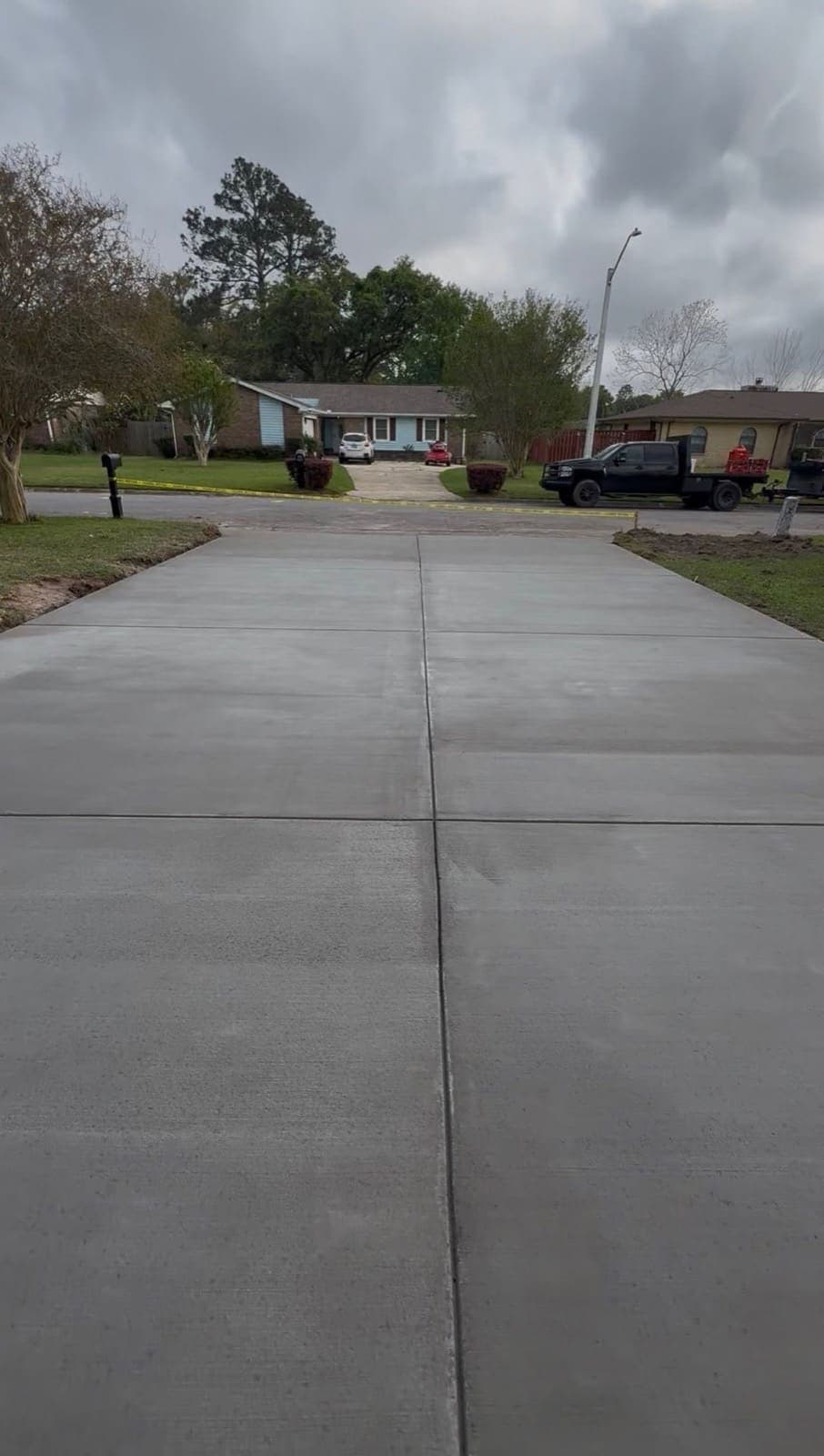
Tear-out and replacement or fresh pours — driveways, patios, walkways, and equipment pads, formed and finished to drain properly.
Learn more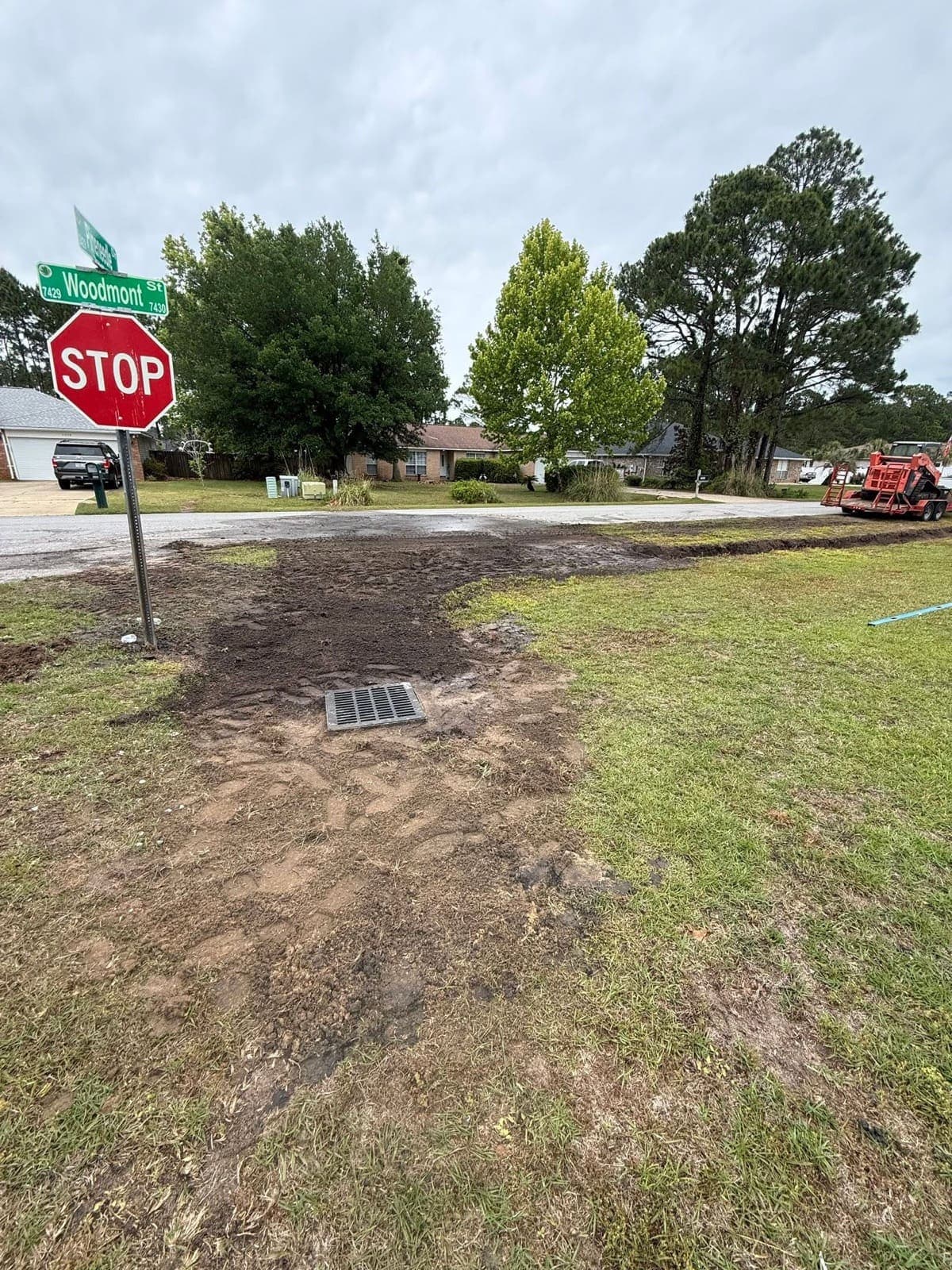
Catch basins, buried drain lines, and regrading that move water away from your foundation instead of into it.
Learn more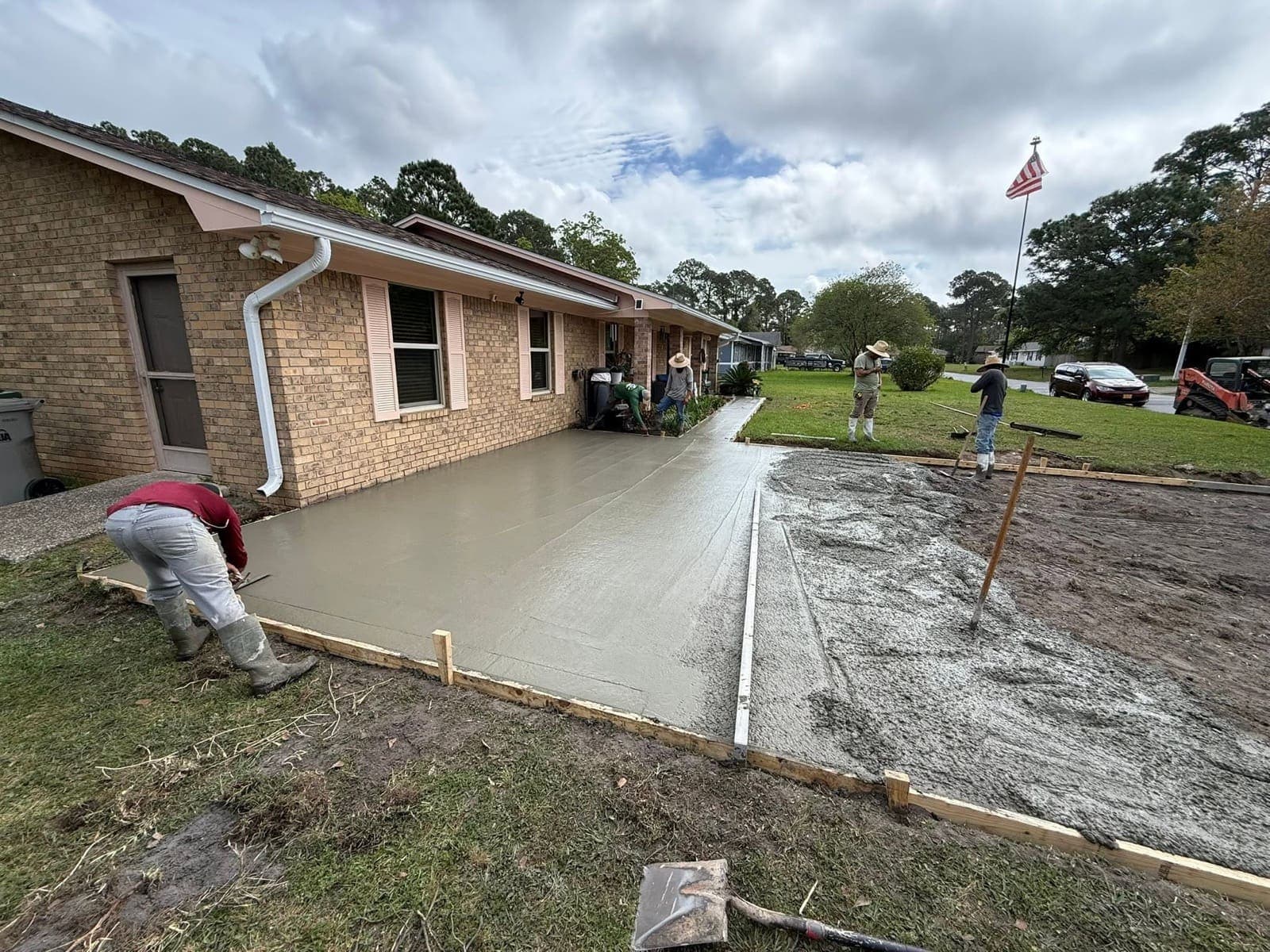
Skid-steer clearing, grading, and site preparation that gives whatever comes next a level, stable base.
Learn moreFree estimate
Send a couple of photos and a sentence. We will tell you honestly whether it is something we should come look at — and what it is likely to take.