
Area and grass variety
Different warm-season grasses carry different material costs. The right choice for your site is worth more than the cheapest pallet.
New lawns and repair after site work
Graded, prepped, and laid sod that takes root — including restoring the ground after drainage or concrete work.
The short version
Grade, soil contact, and water in the first two weeks decide whether it lives, so we prepare the ground properly before a single pallet is cut.
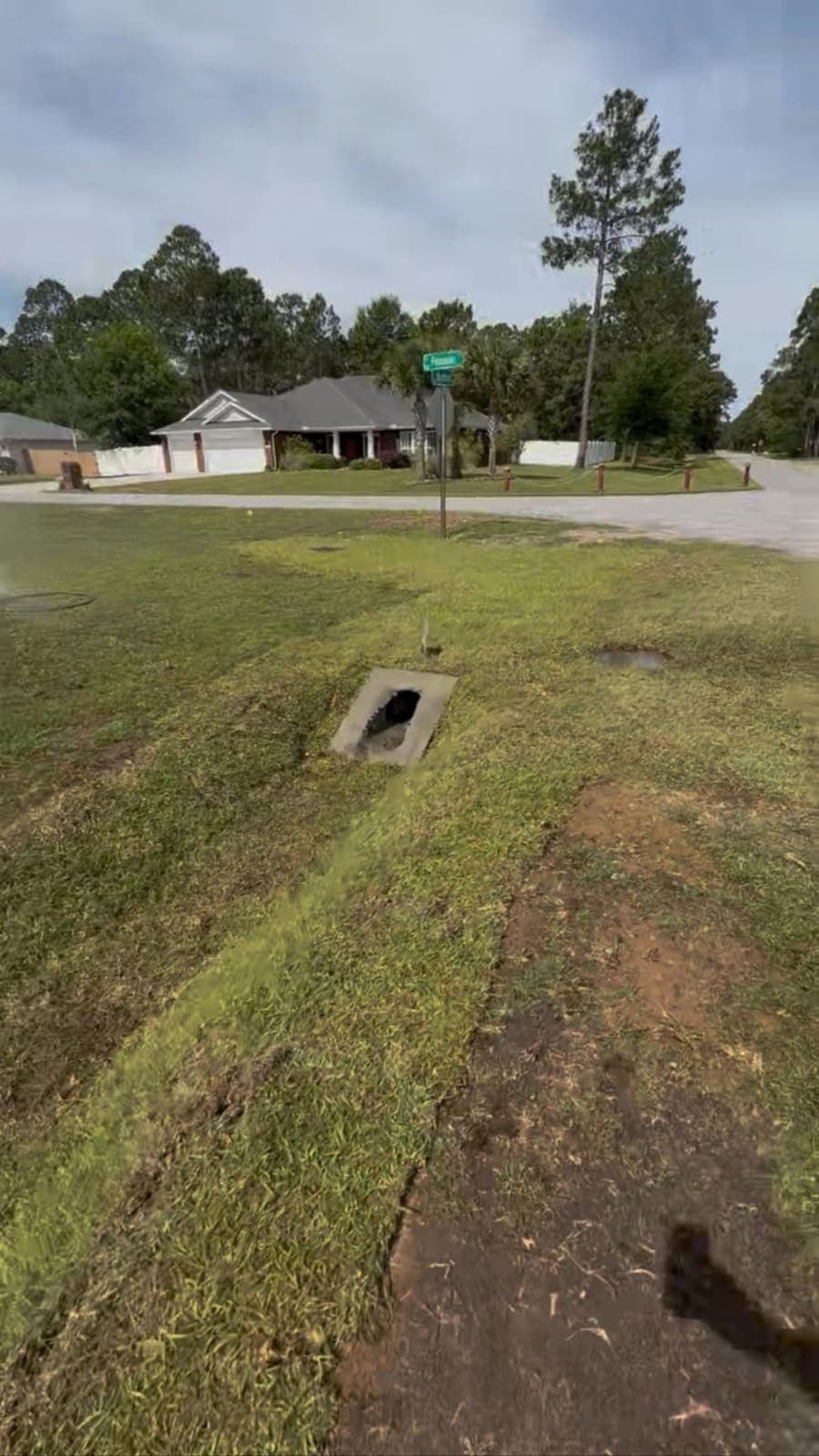
Local conditions
Sod is the most visible five percent of a project and the part most likely to be rushed. It is also the part most likely to fail, because a pallet of sod is a living thing on a clock — it is harvested with almost none of its root system and has a short window to make contact with soil and start rooting before it declines.
Our conditions cut both ways. The growing season is long and warm, which is genuinely helpful. But sandy soil holds very little water, so new sod dries out fast, and the summer heat that makes grass grow also stresses fresh sod badly if it is not watered properly in the first two weeks. More new lawns die of inadequate watering in week one than of anything else.
Grass selection matters too. The common warm-season choices on the Gulf Coast — St. Augustine, centipede, zoysia, and bahia — differ substantially in shade tolerance, water demand, traffic tolerance, and maintenance. Putting a sun-loving variety under heavy oak shade, or a high-maintenance grass on a property nobody wants to spend weekends on, produces a lawn that fails slowly for reasons that have nothing to do with installation.
Recognise any of these? Send a photo — we can usually tell you from the picture whether it needs looking at soon.
How we work
No mystery, no surprises. This is the order it happens in and what each stage is actually for.
Sun and shade, drainage, traffic, irrigation, and how much maintenance you actually want to do all point toward different varieties. This conversation happens before anything is ordered.
Old turf, weeds, and debris come out. Sod laid on top of dead grass or compacted construction spoil has nothing to root into and behaves accordingly.
This is the last practical chance to fix low spots that hold water and to establish fall away from the house. Once sod is down, correcting grade means taking it back up.
The surface is loosened and levelled to give roots something to move into and to eliminate the air gaps that kill sod from underneath.
Sod goes down in staggered joints, tight, with no gaps at the seams — gaps dry out from the edges and become permanent weak lines. Then it is rolled to press the roots into contact with the soil.
The first watering happens immediately and it is heavy. Before we leave you get a plain-English watering schedule for the establishment period, because that schedule is the difference between a lawn and a very expensive mulch.
Pricing
Sod is priced by area, but the ground preparation underneath it is what varies between a straightforward job and an expensive one.
Different warm-season grasses carry different material costs. The right choice for your site is worth more than the cheapest pallet.
Bare, prepared ground is the cheap case. Stripping and hauling off an existing lawn is added labor and disposal.
The bigger the correction needed — low spots, compacted ground, construction spoil, poor fall — the more prep hours before a single roll is cut.
Sod is heavy and time-sensitive. If pallets can be dropped close to the work it goes down fast. If every roll has to be barrowed through a side gate, that is real time.
Whether the property already has working coverage changes both the price and, frankly, the odds. New sod without a reliable way to water it is a gamble.
Installation is usually one to two days for a typical residential lawn, including preparation. We schedule delivery so the sod goes down the day it arrives — sod left stacked on a pallet in Florida heat deteriorates quickly.
Establishment is the longer story. Expect a couple of weeks of intensive watering before the roots knit into the soil beneath, and a full season before the lawn is genuinely established. Keep traffic off it early — foot and mower traffic on unrooted sod tears the seams open.
Free estimate, no obligation, and an honest answer about whether it is worth doing.
What to watch for
Worth knowing before you hire anyone — including us. If a quote you are looking at skips these, ask why.
The single most common shortcut. New sod needs soil contact to root. Laid over dead turf or thatch, it sits on a mat, roots poorly, and dries out from underneath.
New sod needs far more water than an established lawn, and our sandy soil drains it away fast. This is where most failures happen, and it usually happens after we have left — which is why we hand over a schedule rather than a vague instruction to keep it damp.
Sod shrinks slightly as it establishes. Joints laid with visible gaps dry from the edges and turn into permanent brown lines and weed corridors.
New sod over a low spot that holds water will rot in that spot. If the yard has a drainage problem, that is the job to do first — not after.
The cheapest pallet is a false economy if the variety is wrong for the light, traffic, or maintenance level of the property.
Questions
Something not covered here? Ask us directly — we would rather answer it than have you guess.
Ask about your projectIt depends on your site. St. Augustine handles shade comparatively well, centipede is low-maintenance and low-input, zoysia is dense and traffic-tolerant but wants more attention, and bahia is tough and drought-tolerant but coarser. We will recommend based on your light, traffic, irrigation, and how much maintenance you actually want.
Considerably more than you would expect, and considerably more than an established lawn. The critical window is the first two weeks, when the roots have not yet reached soil moisture and our sandy ground drains fast. We give you a specific schedule when we finish, because following it is genuinely the difference between success and failure.
Keep traffic light until it has rooted — typically a couple of weeks, which you can test by tugging gently at a corner and feeling resistance. First mow comes after it has knitted in, with a sharp blade and a high cut. Early traffic pulls the seams apart.
Yes, and that is the normal sequence. Restoring the ground is part of finishing those jobs properly rather than leaving you with a solved problem and a torn-up yard.
Our long warm season gives a wide window, and warm-season grasses establish best when they are actively growing. The main thing to avoid is installing when you cannot commit to the watering — a lawn laid the week before you go away is a lawn at risk.
Not strictly, but you need a reliable way to deliver a lot of water for the first two weeks. If that means hoses and sprinklers on a timer, that is fine. If the property has no realistic watering method, we will say so before taking the job.
Often paired with
These jobs disturb the same ground. Doing them together usually costs less than doing them one at a time.
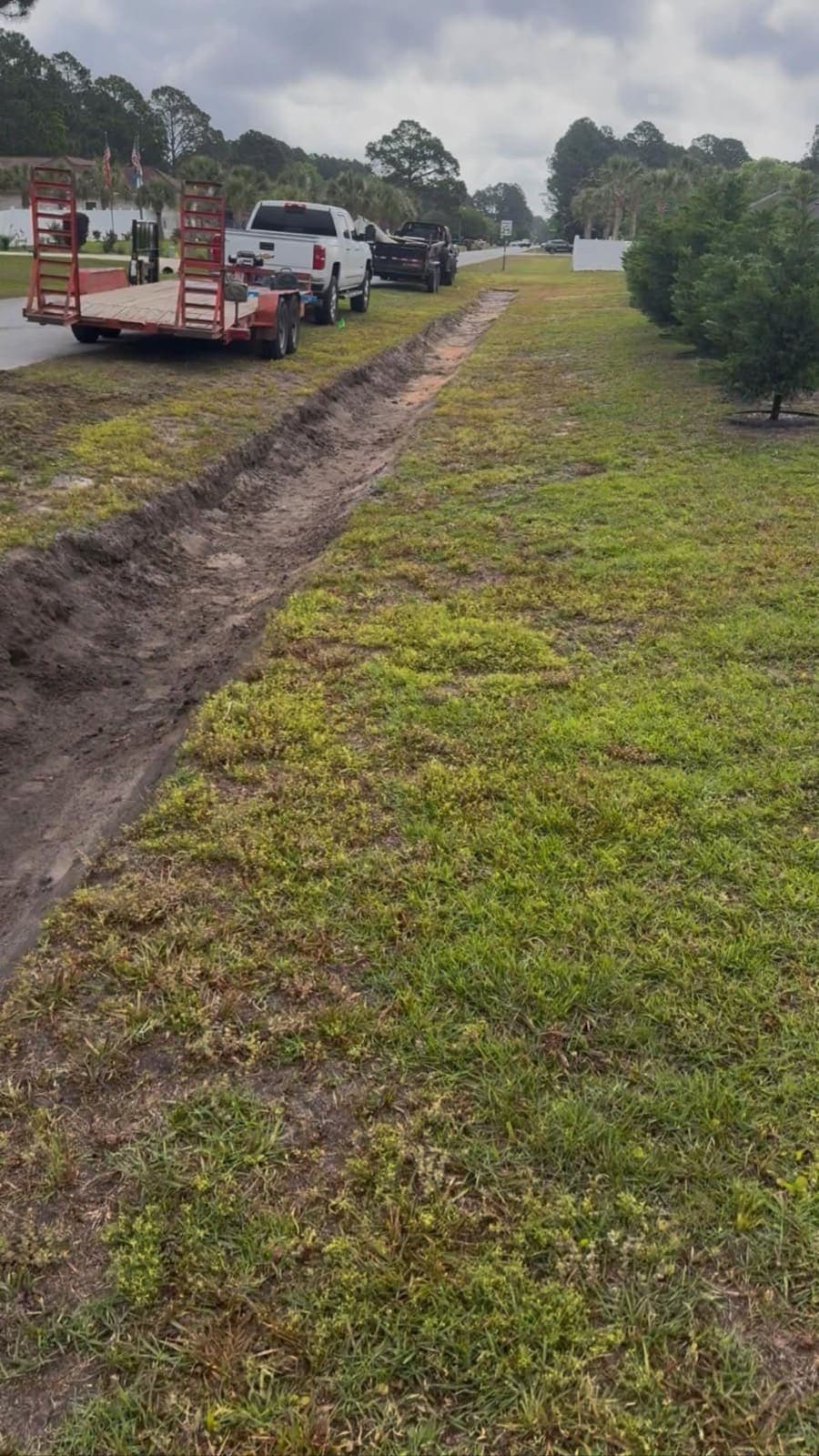
Sprinkler systems planned around how your property is actually zoned, watered, and used.
Learn more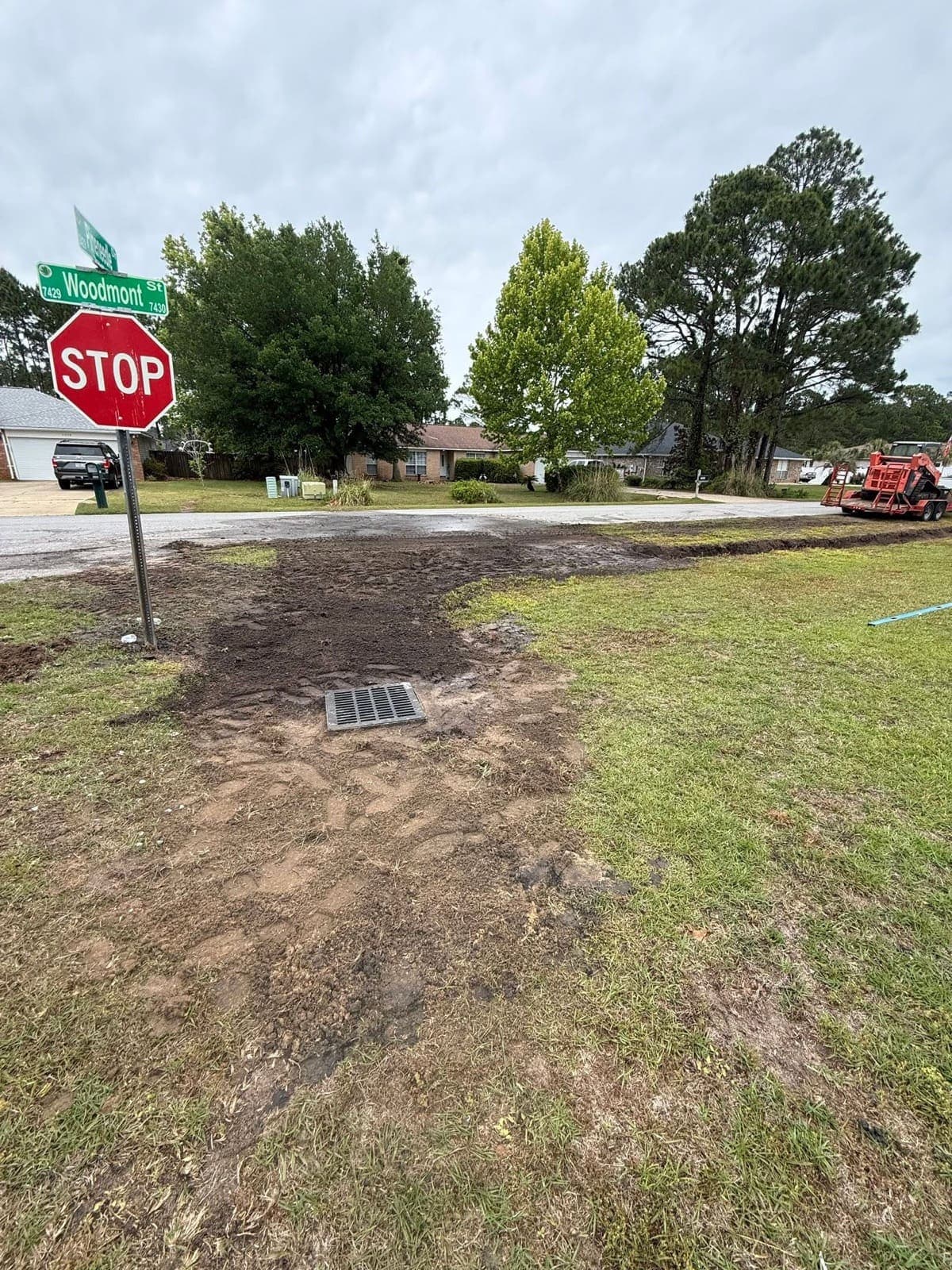
Catch basins, buried drain lines, and regrading that move water away from your foundation instead of into it.
Learn more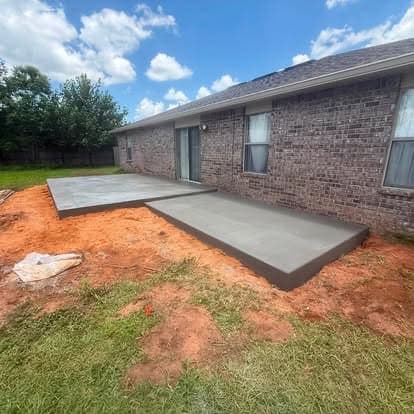
The finishing work that makes a property look intentional — beds, borders, ground cover, and full site cleanup.
Learn moreFree estimate
Send a couple of photos and a sentence. We will tell you honestly whether it is something we should come look at — and what it is likely to take.